
IV lines are essential in healthcare but come with risks like infections, falls, and mechanical issues. Every year, U.S. ICUs report about 80,000 catheter-associated bloodstream infections (CRBSIs), leading to 33,000 deaths and adding $33,000–$56,000 per case in costs. Proper management can prevent these complications. Here’s how to address the most common risks:
- Infections: Disinfect ports with 70% alcohol or chlorhexidine, maintain hand hygiene, and inspect catheter sites daily.
- Falls and Line Entanglement: Use tools like the Beata Clasp to bundle and secure lines, keeping them off the floor to avoid tripping.
- Maintenance Failures: Replace IV tubing on schedule (e.g., every 72 hours for standard lines) and flush lines with saline to prevent clogs.
Adopting sterile techniques, daily checks, and tools like antimicrobial line organizers can improve patient safety while cutting costs associated with preventable complications.
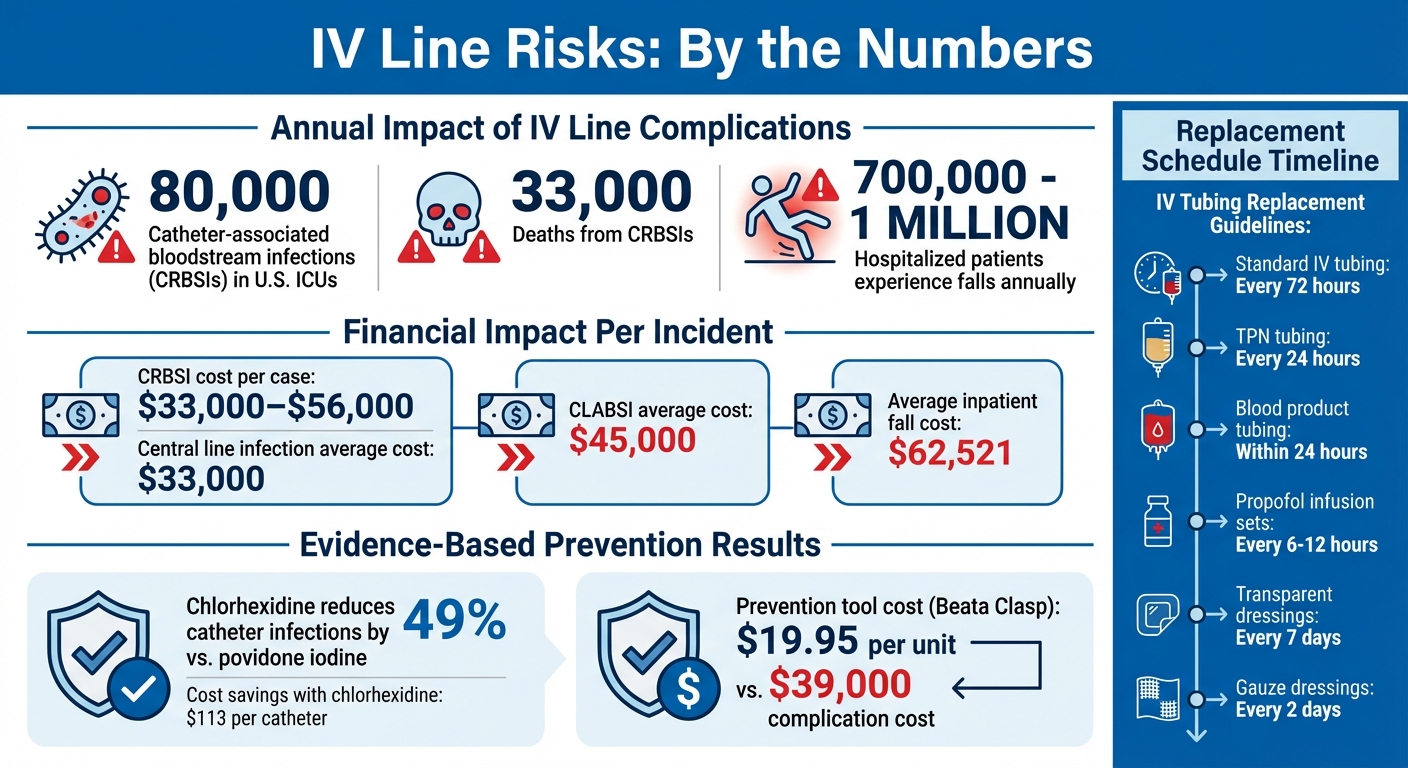
IV Line Risk Statistics and Prevention Costs in U.S. Hospitals
How To Maintain An IV Line? - Nursing Knowledge Exchange
How to Prevent IV Line Entanglement and Falls
Tangled IV lines can lead to serious issues like falls, accidental disconnections, and even injuries for healthcare staff. Keeping IV lines organized is a simple yet effective way to avoid these risks.
Use Medical Line Organizers to Bundle IV Lines
Medical line organizers are designed to group multiple IV lines into one tidy, easy-to-manage bundle. For example, the Beata Clasp was created to tackle challenges posed by hospital beds with four bedrails, which often cause lines to tangle or fall when the bed’s head is adjusted. This device holds IV lines, tubing, and drains securely together, preventing them from getting caught in bedrails.
These organizers are not only secure but also easy to clean. The Beata Clasp attaches to bedrails without adhesives, so there’s no sticky residue, and it can be repositioned effortlessly. Its antimicrobial material minimizes contamination risks, and its latex-free design ensures safety for patients with allergies or sensitivities.
"What a smart tool to have... Super helpful especially during chemo when so many IV lines are active." – Ruth Valentini
Once the lines are bundled, the next step is to keep them elevated and off the floor to reduce tripping hazards.
Keep Lines Off the Floor
After bundling, make sure IV lines are elevated to remove any trip risks. You can attach line organizers to the head of the bed or bedrails so the lines move along with the patient as the bed adjusts. This method is especially useful in high-demand areas like chemotherapy units or labor and delivery rooms, where multiple lines are often in use at once.
During routine checks, ensure that IV tubing has enough slack to allow patient movement but not so much that it drags on the floor. Line organizers also make it easier to keep essential items, like call lights, within the patient’s reach. This feature is particularly appreciated in settings like nursing homes, where keeping call buttons accessible is critical for patient safety and comfort.
Sterile Techniques to Prevent Contamination
Contamination in IV lines poses a serious risk, often leading to central line-associated bloodstream infections (CLABSIs). Each infection can cost around $45,000. The good news? Most of these infections can be avoided with proper handling and maintenance. Here’s how to ensure sterile practices and minimize the risk of contamination.
Scrub and Disinfect Ports Before Access
Every time you access a connection point, it’s crucial to disinfect it thoroughly. Use 70% alcohol or chlorhexidine swabs to scrub injection ports, needleless connectors, and catheter hubs. Let the antiseptic air dry completely - this step is non-negotiable and must follow the manufacturer’s guidelines. Proper disinfection acts as a barrier against pathogens.
Chlorhexidine has proven to be a game-changer. Compared to povidone iodine, it reduces catheter-related infections by 49%. Even better, adopting chlorhexidine for catheter care could save $113 per catheter, thanks to lower infection rates and improved outcomes.
"Hand hygiene before catheter insertion or maintenance, combined with proper aseptic technique during catheter manipulation, provides protection against infection." – CDC
Hand hygiene is the cornerstone of infection prevention. Always wash your hands with soap and water or use alcohol-based hand rubs before and after handling catheter sites or accessing the system. According to experts, it’s the single most effective way to cut down on nosocomial and catheter-based infections.
Inspect and Maintain Lines Daily
Disinfection is just the start - regular monitoring of IV lines is equally important. Check the insertion site daily by palpating it and examining transparent dressings for any signs of redness, warmth, swelling, or drainage.
Keep the dressing clean, dry, and secure at all times. If a dressing becomes damp, loose, or visibly soiled, replace it immediately. Transparent dressings should be changed every 7 days, while gauze dressings need replacement every 2 days. Additionally, inspect tubing and connections for proper positioning, leaks, or any mechanical problems like kinking.
During your daily checks, ask yourself: Is this catheter still necessary? Removing catheters that are no longer essential reduces the risk of infection significantly. This simple step not only minimizes exposure to pathogens but also enhances patient safety. These practices are critical for maintaining IV line integrity and safeguarding patient health.
sbb-itb-f779e18
Regular Maintenance and Timely Line Changes
Ensuring IV lines remain functional and safe demands consistent upkeep and timely replacements. Without proper schedules and flushing protocols, catheters can become clogged, infected, or fail when they're needed most.
Label Lines and Schedule Changes
Using color-coded labels with start dates and times is a practical way to keep track of replacement schedules. For instance, assigning a specific color to each day - like fluorescent green for Tuesday or orange for Monday - allows staff to quickly spot overdue changes.
Different types of tubing have distinct replacement timelines. Here’s a breakdown:
- Standard IV tubing for continuous fluids: Replace every 72 hours.
- TPN tubing: Change every 24 hours or whenever a new bag is started.
- Blood product and lipid emulsion tubing: Replace within 24 hours of starting the infusion.
- Propofol infusion sets: Change every 6 to 12 hours.
Labeling can also help differentiate access types. Specific labels like "Central Line", "PICC", "Midline", or "Med Line" minimize medication errors and ensure the right treatment reaches the correct line.
But labeling isn’t the only critical step - proper flushing protocols are just as important for keeping catheters functional.
Follow Flushing Protocols for Catheter Patency
Flushing IV devices with normal saline before and after administering medications is key to keeping them open and preventing drug incompatibilities. It’s important to match the flush rate to the medication’s infusion rate to avoid a bolus effect. For volumetric infusion sets, use at least 20 mL of 0.9% sodium chloride for flushing. This is especially crucial for small-volume infusions. For example, neglecting to flush a 50 mL bag could lead to a drug loss of up to 50%.
To further reduce the risk of thrombosis, use catheter locks with normal saline or heparin. Additionally, always clean disconnected IV connection sites with isopropyl alcohol and replace them with a new injection cap.
"The intravenous devices should be flushed with normal saline before and after medication administration." – StatPearls
Adopt Protocols and Tools for Long-Term Risk Reduction
Minimizing risks associated with IV lines requires a unified approach across the hospital. By establishing standardized protocols and utilizing effective tools, healthcare facilities can ensure consistent safety practices across departments. These efforts build on earlier recommendations for line organization and daily maintenance.
Implement Hospital-Wide Policies
Hospitals should adopt comprehensive care bundles that incorporate evidence-based practices. As the CDC highlights, "Use hospital-specific or collaborative-based performance improvement initiatives in which multifaceted strategies are 'bundled' together to improve compliance with evidence-based recommended practices". Daily evaluations of catheter necessity are critical - removing unnecessary catheters reduces the risk of infections and complications. Additionally, specialized IV teams have been shown to lower bloodstream infection rates, reduce complications, and cut costs. Proper staffing is equally important, as higher patient-to-nurse ratios in ICUs often correlate with increased infection rates. To ensure consistency, hospitals must require education and regular competency assessments for all staff handling catheters.
While policies lay the groundwork, specialized tools can further support these safety measures.
Use Antimicrobial Line Organizers
To complement institutional protocols, hospitals should consider antimicrobial tools designed to improve long-term safety. Antimicrobial line organizers, such as the Beata Clasp, help prevent bacterial colonization while keeping IV lines neatly bundled. This organization not only minimizes the risk of bacterial contamination but also reduces line entanglement, which could lead to patient falls. Priced at $19.95 per unit or $467.50 for a pack of 25, these tools are a cost-effective solution, particularly when a single complication can cost up to $39,000. The Beata Clasp is antimicrobial, latex-free, and easy to clean, making it ideal for use in hospitals, ICUs, and even home care settings. For facilities looking to test the product before committing to bulk purchases, an evaluation pack of 10 units is available for $163.00.
Additionally, sutureless securement devices offer another layer of protection by preventing catheter migration and dislodgement, further lowering infection risks. In high-risk units where standard prevention measures may not suffice, antimicrobial-impregnated tools become a critical addition.
Conclusion
Minimizing risks associated with IV lines requires careful organization, strict adherence to sterile practices, and consistent upkeep. Elevating and bundling IV lines is crucial to avoid tripping hazards - especially since an estimated 700,000 to 1 million hospitalized patients experience falls annually in the U.S.. Proper disinfection of connection points using chlorhexidine or alcohol can lower catheter-related infections by up to 49% compared to traditional methods. Regular inspections and timely replacements of IV lines ensure they remain functional and free from contamination. These steps not only improve patient safety but also help avoid expensive complications.
The financial impact of preventable incidents is staggering. For instance, the average cost of an inpatient fall is $62,521, while a single central line infection can add approximately $33,000 to a patient’s care. Tools like the Beata Clasp provide an effective way to keep IV lines organized and reduce these risks, offering measurable financial benefits.
FAQs
What are the best ways to prevent infections from IV lines in hospitals?
Preventing infections from IV lines hinges on meticulous infection control measures. Healthcare workers must prioritize proper hand hygiene and use sterile barriers such as masks, gloves, gowns, and drapes during catheter insertion. Preparing the skin with a chlorhexidine-alcohol solution and carefully selecting the insertion site are also key steps to reducing risks.
Once the catheter is in place, maintaining sterility is just as important. Sterile gauze or transparent dressings should be used and replaced promptly if they become wet, dirty, or dislodged. Before accessing ports, disinfect them thoroughly with antiseptics like chlorhexidine or alcohol. Additionally, regularly bathing ICU patients with a chlorhexidine-based solution has been shown to lower the chances of infection.
To further enhance safety, tools like the Beata Clasp offer practical advantages. This device keeps IV lines organized and off the floor, reducing contamination risks. Its antimicrobial properties and easy-to-clean design make it a valuable addition to infection prevention strategies.
What are the best ways to prevent IV line entanglement and reduce patient falls in hospitals?
Preventing IV line tangles and minimizing patient falls starts with effective IV line management and safety protocols. Here’s how healthcare professionals can help ensure a safer environment:
- Keep IV lines tidy and secure: Arrange IV poles and tubing in a way that prevents tangling. Make sure lines stay off the floor and out of the way of patient movement to avoid accidents.
- Use specialized tools like an IV line organizer: Devices such as the BeataClasp can group and secure tubing, helping to reduce the risk of snagging, contamination, and tripping. These tools are often antimicrobial and easy to clean, adding an extra layer of safety.
- Perform regular inspections: Check IV lines hourly to ensure they are properly tensioned, clean, and routed. Any slack or misaligned tubing should be adjusted right away.
- Provide staff training: Educate healthcare teams on effective line management techniques and patient safety practices to maintain consistent care standards.
Following these steps can help hospitals create a safer space for both patients and staff, reducing the risks tied to IV line mishaps.
Why is regular inspection and maintenance of IV lines crucial for patient safety?
Regularly checking and maintaining IV lines plays a key role in keeping patients safe and avoiding complications. With proper care, the risks of infections, line failures, and problems like falls or tubing entanglements can be significantly reduced.
Routine inspections allow healthcare professionals to ensure IV lines stay clean, secure, and in good working order. Even small actions, like using reliable IV line management tools, can create a safer and more efficient environment for both patients and staff.